From Reflection to Action: The Student Agenda for 2026
2025 was not a quiet year. It was a year that reminded us why student voices matter in global politics. From ongoing conflicts and humanitarian crises to setbacks for human rights and climate action, the past year made one thing clear: international cooperation is under pressure, and young people cannot afford to be passive observers (United Nations, 2025; BBC, 2025). For students engaged in global issues, 2025 reinforced how closely our futures are tied to decisions made far beyond campus. Wars do not stay contained, climate inaction affects generations unevenly, and shrinking democratic spaces hit young people first (Freedom House, n.d.). Yet throughout the year, we also saw students step up: organising debates, raising awareness, and demanding accountability (VG, n.d.). That matters.
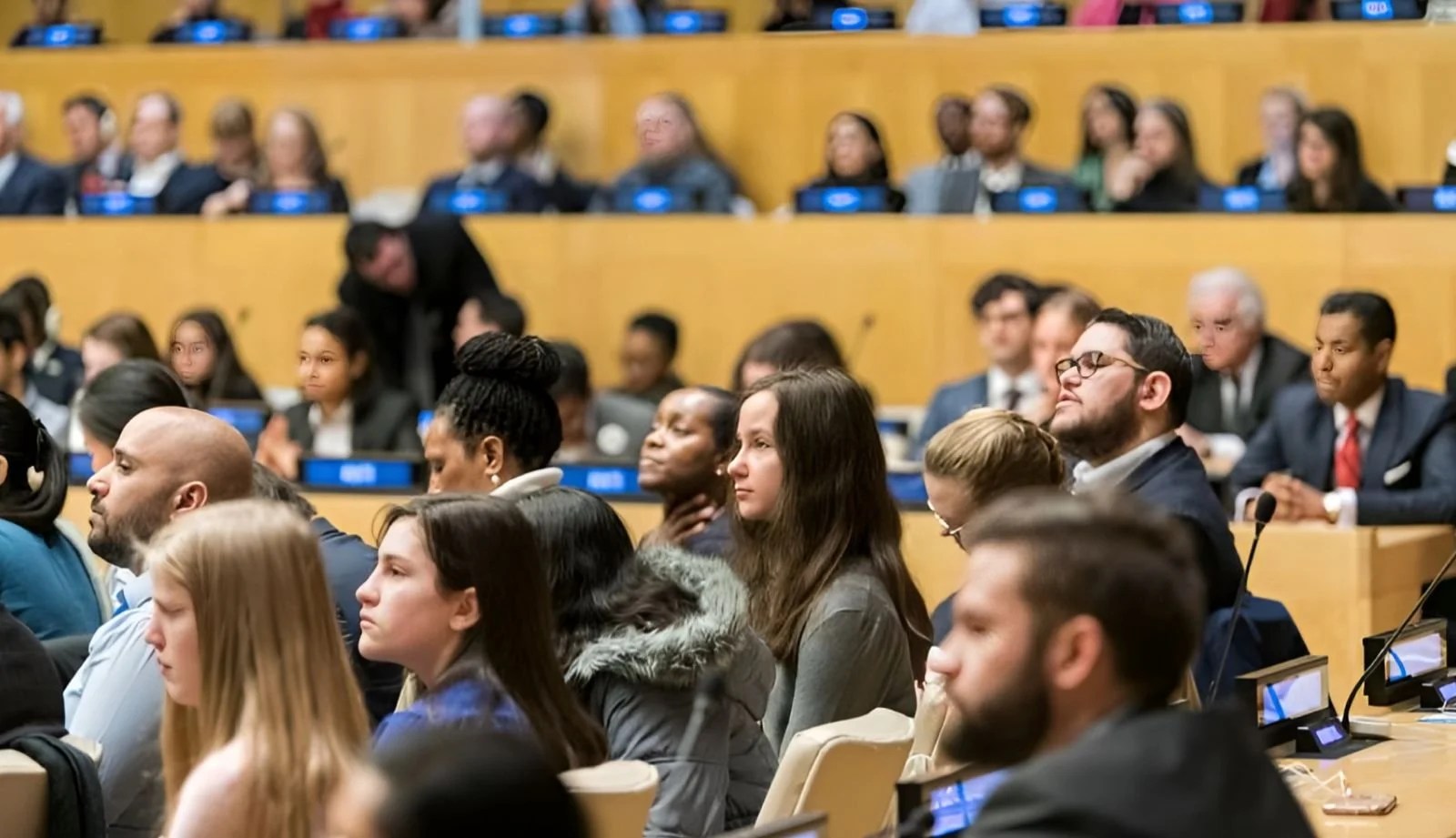
As we move into 2026, the focus must shift from reacting to actively shaping. Students should push for stronger youth participation in international decision-making, not as a symbolic gesture, but as a real contribution. Too often, young voices are invited into rooms after decisions are already made, reducing youth participation to a symbolic gesture rather than a meaningful influence (United Nations, n.d.). Youth are important and should be invited in and heard. In 2026, advocacy must be about access, influence, and long-term inclusion.
We should also focus on connecting global issues to everyday student life. International security, climate policy, and human rights are not abstract topics; they shape education, job prospects, mental health, and trust in institutions (OECD, 2022). Making these links clearer strengthens both engagement and impact.
Finally, 2026 should be the year we defend multilateralism more confidently. The UN system is imperfect, but it remains one of the strongest tools we have for cooperation, dialogue, and collective problem-solving (United Nations, 2021). Students have a role in defending, reforming, and reimagining it, through informed advocacy, critical debate, and solidarity across borders.
The challenges ahead are real. But so is student engagement. If 2025 showed us anything, it is that change does not start with governments alone; it starts with people who care enough to speak up. In 2026, us students must keep doing exactly that.
United Nations (2025) Report of the Secretary-General on the Work of the Organization. https://www.un.org/sites/un2.un.org/files/sg_annual_report_2025_en.pdf
John Simpson (2025, December 29). John Simpson: 'I've reported on 40 wars but I've never seen a year like 2025'. BBC. https://www.bbc.com/news/articles/cj4qp17e1lqo
Freedom House (n.d.) Countries and Territories. https://freedomhouse.org/country/scores
VG (n.d.) Protest. https://www.vg.no/tag/protest
United Nations (n.d.). Youth, peace and security: a guide. https://www.un.org/en/peace-and-security/youth-peace-and-security-guide
OECD (2020, October 22). Governance for Youth, Trust and Intergenerational Justice. https://www.oecd.org/en/publications/2020/10/governance-for-youth-trust-and-intergenerational-justice_0fbfe33d.html
United Nations (2021). OUR COMMON AGENDA - Report of the Secretary-General. https://www.un.org/en/content/common-agenda-report/assets/pdf/Common_Agenda_Report_English.pdf
Cover photo: https://social.desa.un.org/issues/youth/un-inter-agency-network-on-youth-development